Building Thriving Communities: Veery Launches at Colorado Startup Week
Community builders came together in Denver to talk about what it takes to create communities that last.
What makes a community worth showing up for, participating in, and coming back to?
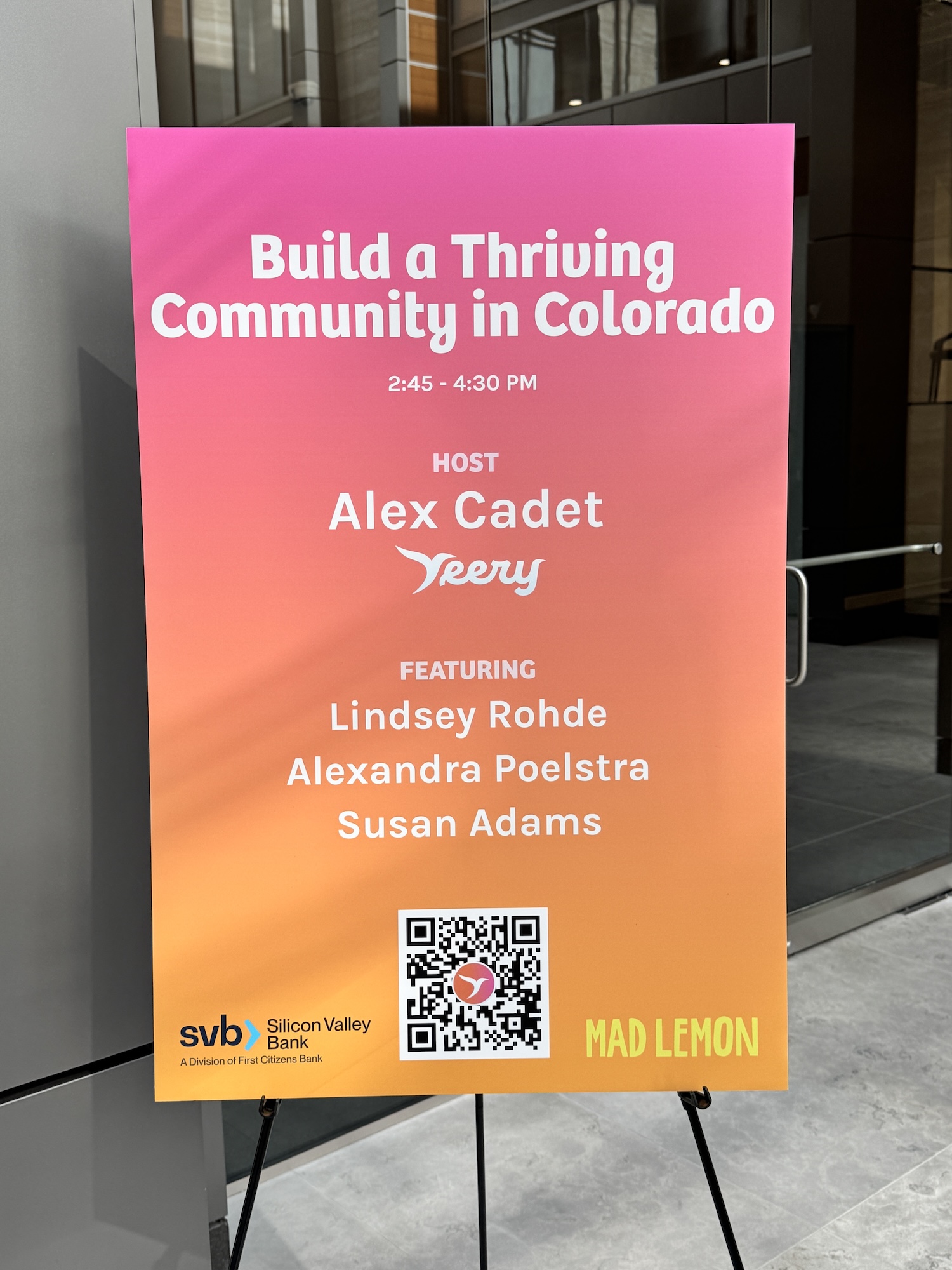
That question was at the center of “Build a Thriving Community in Colorado,” a panel held during Colorado Startup Week in Denver. Community builders, founders, event organizers, and startup ecosystem leaders gathered at the Tabor Center to share practical lessons about how communities begin, how they grow, and what keeps people connected over time.
The afternoon also marked an important milestone for our team: the event was the official launch of Veery. It was an ideal setting to introduce a platform built around meaningful professional connection. Attendees were able to experience Veery during the event, contribute to Q&A, intelligently network, and build relationships that could continue after the event.
Watch the Full Video
Three Community Builders, Three Different Paths
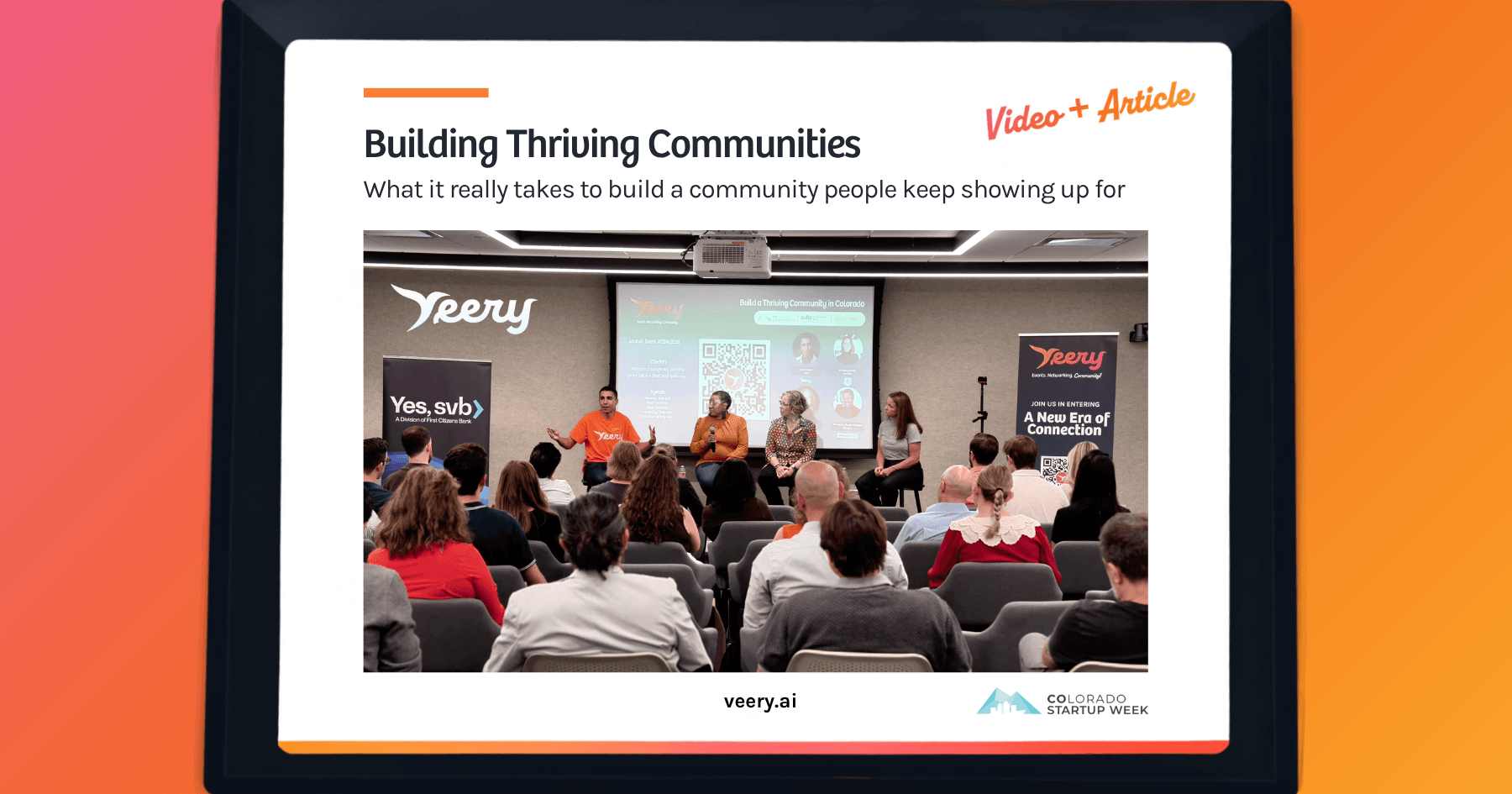
Veery CEO Alex Cadet moderated a conversation with three leaders who have built and supported communities across Colorado: Alexandra Renée Poelstra, Chapter Director for Startup Grind Denver and Colorado Springs; Susan Adams, founder of Women in AI Colorado and a leader within the broader Rocky Mountain Artificial Intelligence Interest Group community; and Lindsey Rohde, Co-Executive Director of Colorado Startups. Each came to community building through a different path, but their experiences revealed a number of common principles.
Alexandra shared how her own startup journey originally led her to Startup Grind. Looking for resources and other founders who understood what she was trying to build eventually inspired her to start a local Startup Grind chapter herself. What began as a search for her own community became an opportunity to create one for others.
As artificial intelligence rapidly entered the public conversation, Susan’s curiosity led her to seek out others asking similar questions. When an opportunity emerged to build a Women in AI group within the Rocky Mountain AI ecosystem, she approached it by listening first and allowing participants to help shape what the community would become.
For Lindsey and Colorado Startups, rebuilding momentum after COVID meant recognizing that Colorado did not necessarily need another new startup community. Instead, the opportunity was to strengthen something that already existed and create new reasons for people to participate.
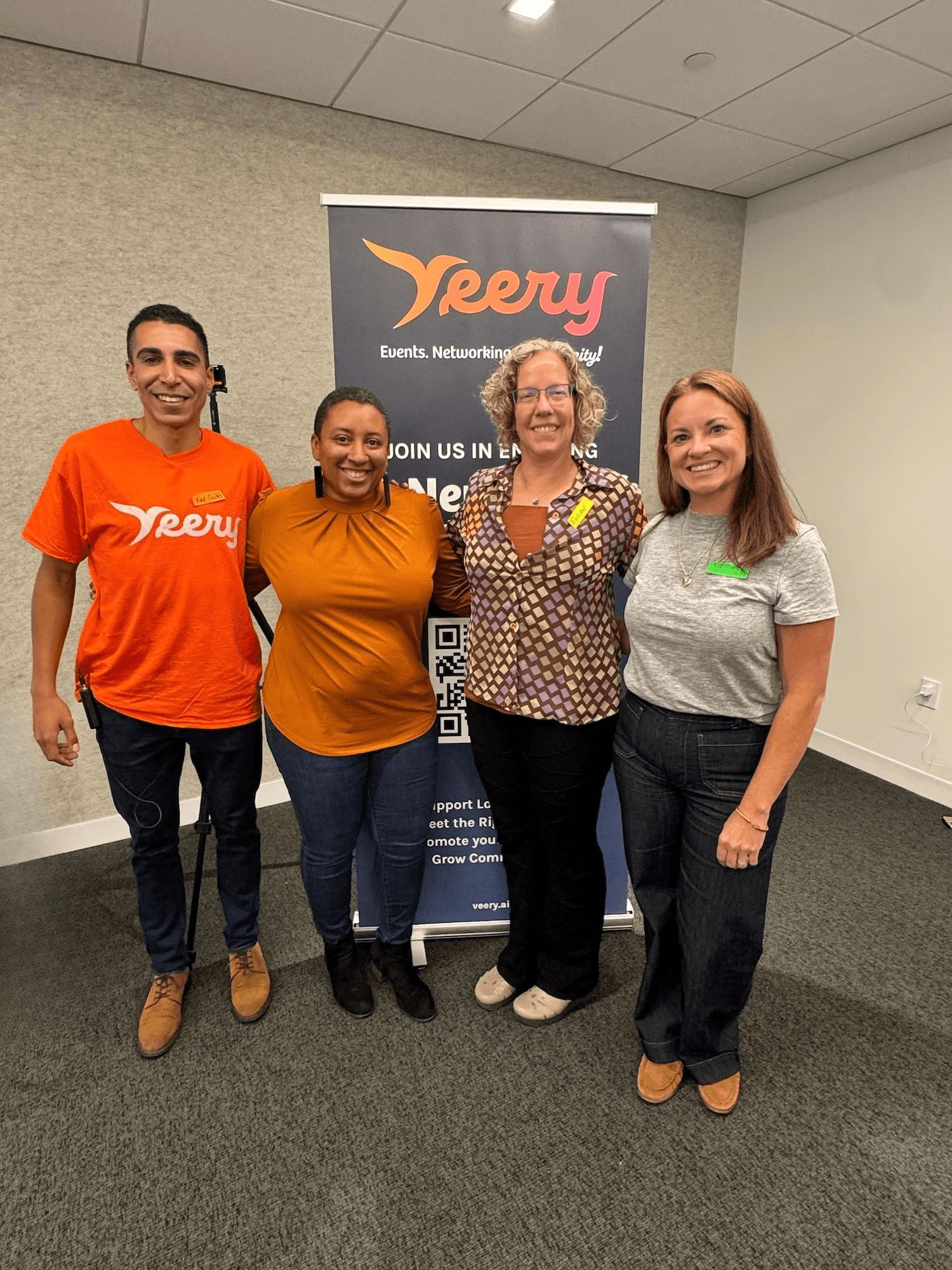
Left to right: Alex Cadet, Alexandra Renée Poelstra, Susan Adams, Lindsey Rohde
Communities Start With an Intention
One of the clearest themes of the conversation was that strong communities begin with a clear understanding of who they are for and why they need to exist.
Lindsey encouraged community builders to become very specific about the people they hope to serve and to continue refining that understanding as the community evolves. Alexandra similarly emphasized knowing why you want to build a community in the first place, what it represents, and how participating will positively affect the people who join it.
That clarity matters even more today because people have become increasingly intentional about where they spend their time. An event or community now competes with countless other demands for attention, so simply providing another place to gather is rarely enough. People need a meaningful reason to participate.
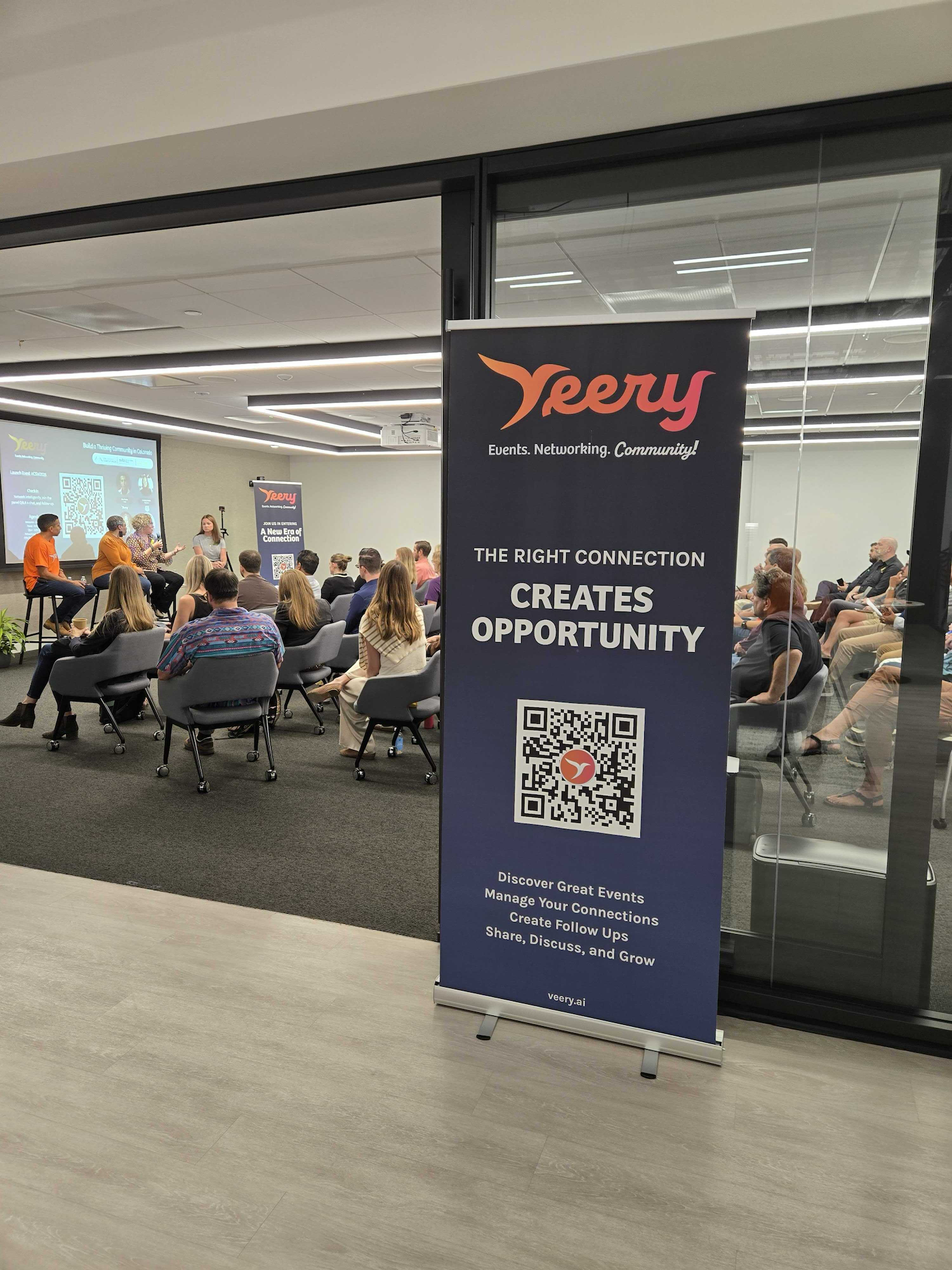
What rituals and tactics, are working?
Rituals Turn Gatherings Into Community
The panel repeatedly returned to the importance of rituals. For Colorado Startups, some of those rituals have taken the form of startup ski days and hikes. They may not look like traditional business programming, but they fit the culture of Colorado and give people repeated opportunities to form relationships outside of a conference room.
Susan described rituals within Women in AI Colorado that are deliberately designed to create participation. Attendees may reflect on a question with another person, participate in facilitated conversations, or take part in “asks and offers” that allow community members to identify ways they can help one another.
The specific activity is less important than the consistency behind it. When people recognize the rhythm of a community and understand how they can participate, individual gatherings begin to develop into something much more enduring.
How do community builders create steady growth?
Consistency Matters for Event Organizers
Community building rarely begins with a packed room. Alexandra spoke about the importance of consistently holding events, communicating with members, making friends at other community events, and simply continuing to show up. An early meetup might attract only a handful of people, but repeated participation creates opportunities for those relationships to deepen and for word of mouth to spread.
Communication requires that same consistency. Sending one event announcement and hoping people show up is rarely an effective community-building strategy. Email, reminders, conversations, partnerships, and ongoing engagement all contribute to momentum. The broader lesson was simple: communities grow through repeated human interaction, not through one successful event.
How to adapt to community needs?
Listening Is a Community-Building Strategy
For Susan, listening was foundational to the development of Women in AI Colorado.
Rather than deciding in advance exactly what the community should become, she created opportunities for members to discuss what they needed, what they were experiencing, and what they wanted from the group. Those conversations helped shape the programming and direction of the community itself.
Lindsey echoed the importance of maintaining an ongoing feedback loop. Community leaders may begin with a vision, but they also need to continue talking directly with members instead of assuming they already know what people value. In that sense, community is not something organizers simply deliver to an audience. The strongest communities are built with their members.
After COVID and in the Age of AI, what does community look like?
In the Age of AI, Human Connection Matters More
The conversation naturally turned toward how both the pandemic and artificial intelligence have changed the way people think about community. COVID disrupted many of the habits and environments that once brought people together. At the same time, it made people more intentional about how they spend their time and what they expect when they choose to attend something in person.
AI brings a different kind of change. For community builders, it can help with communication, research, content creation, organization, and repetitive administrative work. Those efficiencies can give organizers more time to focus on areas where human involvement matters most.
Susan raised a larger question about how people maintain their own agency while embracing powerful technology. The challenge is not simply deciding whether to use AI, but figuring out how to benefit from it without losing the distinctly human qualities that make communities meaningful.
That may be one of the greatest opportunities for community builders today. Technology can help facilitate connection, but listening, trust, empathy, conversation, and belonging come from people.

How do I grow a community fast?
Collaboration Makes Communities Stronger
Another recurring idea was that community builders do not need to operate as islands.
Alexandra encouraged organizers to collaborate with other communities rather than viewing every organization as competition. Joint events, shared audiences, partnerships, and co-branded programming can expose people to new relationships while strengthening the broader ecosystem.
Her Startup Grind philosophy captures that approach particularly well: make friends, not contacts.
How do I grow a community fast?
Design the Entire Community Experience
Building community also means thinking beyond what happens onstage. Susan encouraged organizers to consider the entire attendee experience, from the moment someone arrives until the moment they leave. Facilitation, introductions, networking, Q&A, and even the transitions between different parts of an event can affect whether people feel welcomed and included.
Lindsey similarly emphasized onboarding. A community experience begins before someone attends their first gathering. The website, event description, communications, expectations, community norms, and initial interactions all help establish the culture people are entering.
Simply putting people in the same room does not guarantee connection. Organizers have to intentionally create the conditions that make interaction easier.
Veery Launches At Colorado Startup Week 2026
Throughout the afternoon, attendees were invited to check into the event through Veery and use the platform as part of the experience. They participated in the panel conversation, submitted and upvoted questions, intelligently connected with other attendees, and began building relationships that could continue beyond the room.
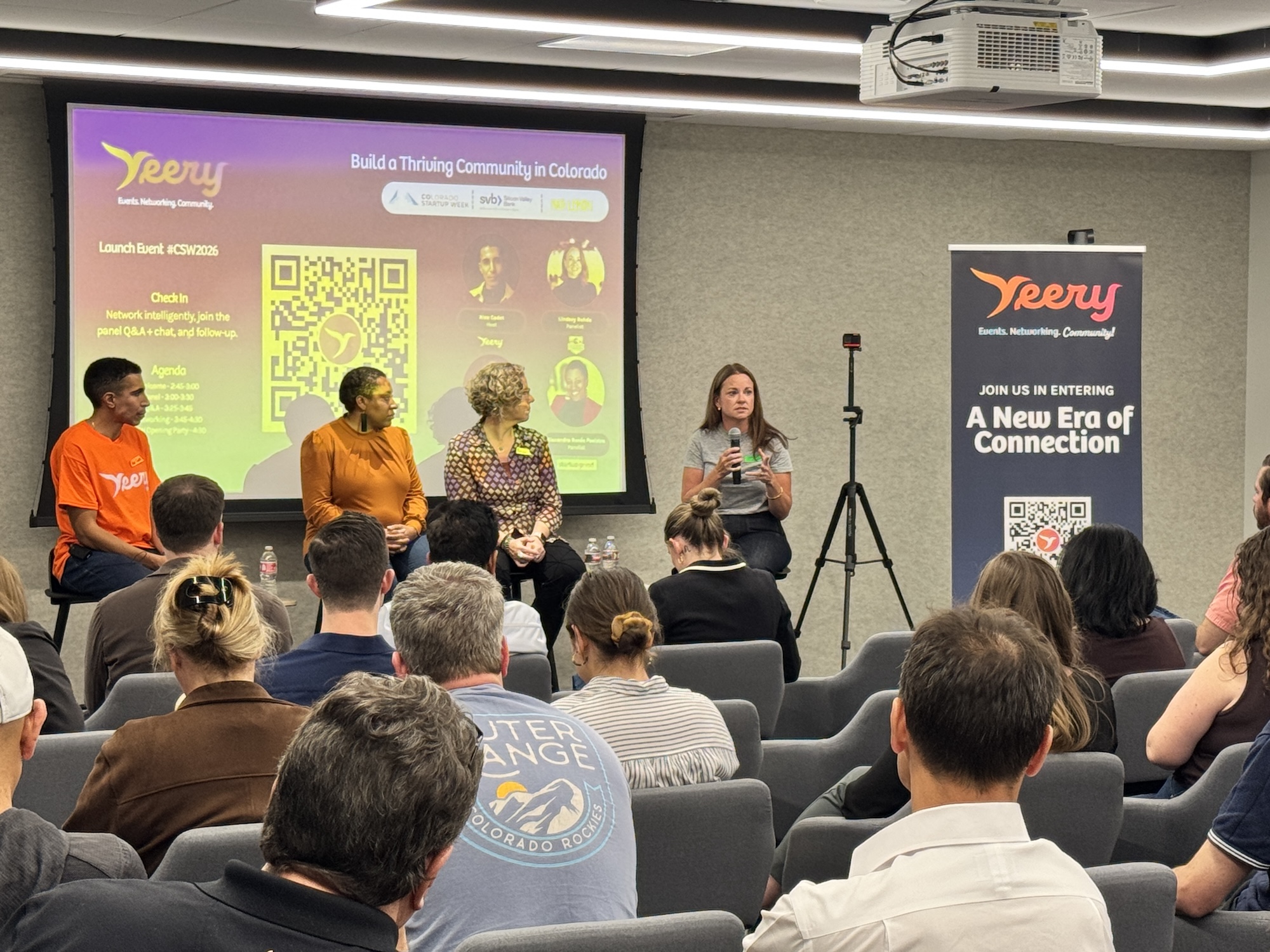
That alignment was reflected in attendee feedback as well. Andrey Kublitskiy, Director of Quality Assurance at Operational Systems, Inc. (OSI), a Colorado custom software consulting firm, saw that connection from both a community and a software perspective.
“It felt like a natural fit for Veery to host, given the overlap with the networking side of the platform. As someone who evaluates software for a living, I really like the ‘Your Matches’ feature. During the after-party at the beer garden, I kept checking it to see if new matches had shown up, so I could navigate a crowd of 1,500+ people more intentionally.”
As the event continued, Andrey could see the potential as more people began using the platform.
“As adoption grows, I think it will change how we approach networking, making it easier and more efficient to find the right matches and get the most out of events.”
His experience offered a tangible example of the problem Veery is designed to help solve. Rather than moving randomly through a large crowd and hoping to encounter the right person, Andrey was already using Veery to make that process more intentional.
That distinction is important. Technology cannot create a meaningful relationship by itself. It can, however, make it easier for someone to discover the person on the other side of the room who might be worth meeting.
Community Starts With Connection
Perhaps the clearest lesson from the afternoon was that there is no single formula for building a thriving community. Some communities begin with a few people around a table. Others begin with a Meetup group, a professional challenge, a shared curiosity, or simply the realization that the community someone needs does not yet exist.
What successful communities appear to share is intention. They listen. They experiment. They establish rituals. They communicate consistently. They create opportunities for members to help one another, and they continue evolving as the needs of their communities change.
Thank You to the Community That Made It Possible
A special thank you to Alyssa Bueno and First Citizen Bank - Silicon Valley Bank for welcoming us and providing the space for the event, and to Mad Lemon for sponsoring the networking session that followed the panel. Their support helped create an environment where people could learn, connect, and continue the conversation after the panel ended.
We are also incredibly grateful to Alexandra Renée Poelstra, Susan Adams, and Lindsey Rohde for generously sharing their experience, lessons, and practical advice with the community. Their perspectives made the discussion valuable not only for established community leaders, but also for founders, event organizers, and anyone thinking about creating a community of their own.
Finally, thank you to everyone who joined us during Colorado Startup Week. You asked questions, shared ideas, tested Veery, met new people, and helped turn a conversation about community into a community experience of its own.
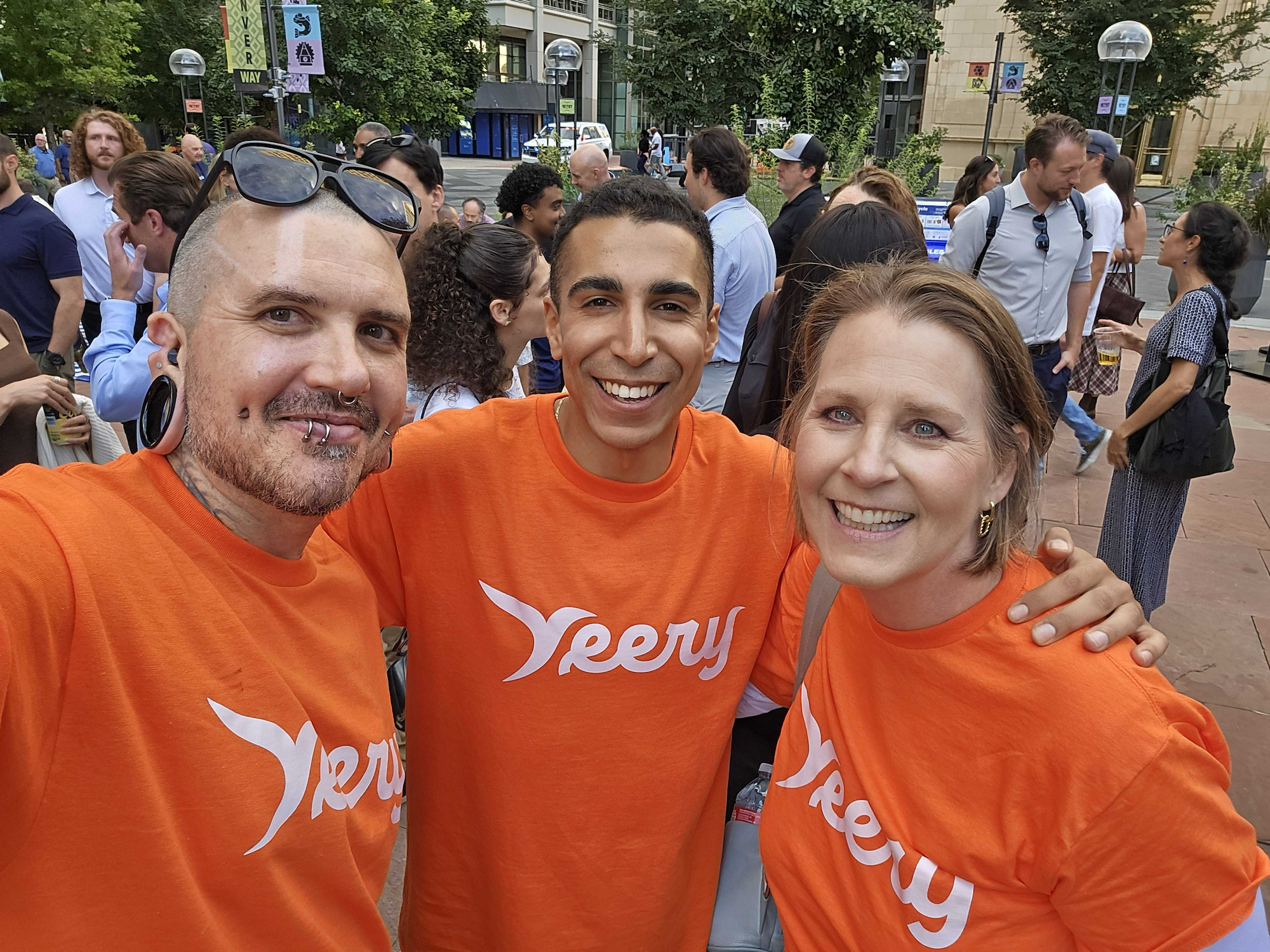
Left to right: Rich Rudzinski, Alex Cadet, Erin Lowe
Panel Transcript
I have two intentions for today
one is I want you to leave the room with
strategies that you can implement tomorrow tactics
that you can implement tomorrow as a community
builder as an event organizer as a founder and then two
I want to give you the connections to support
that journey of community builders so with that
if you could go and talk about
your community introduce yourself
and I'll actually introduce myself
before I get into that I'm Alex Cadet CEO of Veery
and Alex would you like to start
Hi I'm Alexandra Reneeé Poelstra
I am the chapter director for Startup Grind Denver
Startup Grind is the world's largest startup community
representing over 5 million members 150 chapters
in 75 different countries and I handle the Denver
chapter as well as the Colorado Springs chapter
and I love a community building
I'm Susan Adams I'm the founder of Women in AI Colorado
which is actually part of a much larger ecosystem
called Rocky Mountain Artificial Intelligence Interest
Group known as RMAIIG how many of you know about
alright alright we got some folks here
so I'm a sub group of that ecosystem which
really has taught me a lot about community listening
I'm excited to be here to speak to that
awesome I'm Lindsay Rohde co-executive director of
and for Colorado Startups
my co-e is right over there in the bright shirt Micah Mador
I see some familiar faces thanks for being here
actually going off of what Alex said and the intentions
it's really
important to me I agree that you walk away from today
with the tangible things so
in reflecting on the questions
that we're gonna cover today there was I'm
like I have a lot to say here
this is more than I thought so if I miss anything
or you think I should have an answer
like I'm gonna be hanging out there after
so come find me
Colorado Startups it is the state's largest generalist
startup community
and we live in Slack which is over 5,000 people
and we reach over 25,000 people through
LinkedIn newsletter
Facebook thank you Micah for moderating that
because I got rid of Facebook years ago
and so we primarily are in the Front Range but open to
anyone it's not just a Denver
Boulder thing and our
culture and goals just to make sure founders, investors
startup ecosystem
supporters and anyone even just startup community
curious has access to resources that they need here
OK so in the room here who is a founder
OK who is a community organizer or
great and what about an event organizer
awesome that definitely
gives a lot of context to those in the room so
the second question going into so every community
has a story has a first chapter
what did that look like for your community and
how did you feel momentum you know to get started
I can start sure so I didn't start the community
our very friendly founder Paul Foley started it and so
that was in Micah correct me here that was in 2015
when Paul started
so what it really looked like was about
four or five years ago Micah
and I sat down with a group of people at lunch at
Black Belly Deli in Boulder
and we're like this community
needs to come back together post-COVID there's
stuff happening here stuff happening there
there's some redundancies
and so we had founders at the table we had
ecosystem and organizers there and so
we just talked about what that could look like well
what we did know for certain at that time is that the community
didn't need another community to join haha
and so we decided to reach out to Paul and say like
here's our vision
and he was focused on other things at the time and so
it was lunch it was let's lean into and leverage
the thing that already exists and has the reach
and then we started startup hikes
and ski days and I think that we could say we built and
made stronger this community
off the backbone of those startup
hikes and ski days and I'm gonna talk more about
those rituals
when we get to later questions so that's me
so ours is really about a moment in history
right so artificial intelligence
showed up to the public in November 2022 and
I had a deep deep curiosity to be in conversation
about that moment it was highly
impacting I'm an instructional designer curriculum
strategist faculty member I work in academia
and I could see right away myself
but I needed to check on that like what is this thing
what is about to happen what what do people need
so it actually started from me literally
the curiosity that's
inside of me and also my passion for education
so I went to an RMAIIG meeting and I was blown
away by what was there
and I talked to people afterwards and
they were building these subgroups and we now have
11 different specific subgroups to AI and they needed
someone to start Women in AI and I was like sign me up
but what really happened really where the moment
was was when I had these first meetings
I didn't do sit and get
it was really about listening
what does the community need what do they want
what's happening in the news what's happening in our
communities
and that's what made it so exciting
is I actually created strategy little
thought partner groups triads in the first few meetings
to allow the community to actually build
what they wanted it to be
and I think that was really the harbinger
that's getting to where it is today at 1400 members
for me my journey began
as a startup so it started in Carlsbad
California which is originally where I'm from
and I wanted to build an app called My Peeps and
it was like a networking app you know before like
LinkedIn was like super popular but I had no like software
background and I was like I don't know
how to build this app I have this startup idea
where is it gonna go and where do I get resources
for that so I went to the internet like everybody does
and I googled
some things I was like startup tools and resources
and then this thing called Startup Grind popped up
and I was like oh this is cool and I found out that this was an awesome community that was like
hosting events every month and having cool speakers and
I have all these tools and resources
but the problem was is it was in San Diego
and I was like okay that's like 40 minutes from me
and so I was like oh I only want to go to San Diego
and I'm the type of person like if the table
isn't there then I'll just build the table
so I was like well just start my own chapter so I
decided that I would open up a chapter in Carlsbad
California and I sent in my application and my
video and I said you know North County San
Diego is a great place for startups we actually have
a lot of really cool
startups and a startup scene that's here
and a lot of people looking for these tools
and resources and they thought yeah this is
great I was very convincing in my application
video on why they should do it and they believed me
I don't know if that was a good
idea or not but they did and so I was like
alright great now we have this community here
and now I can find other people like me who wanted to have a startup
build something and so I started
hosting events and connecting with other founders and
building my community
I never did anything with My Peeps
you know I never went anywhere
but I did end up developing you know apps
later down the line
which maybe I'll talk about later but
you know it was a way for me to connect
with other people that were going through the same thing that I was going through
and I think that's what community is all about it's finding a group of people
we're all on a very similar journey and helping uplift
each other and that's what I loved about Startup Grind
because the motto was
give first make friends help others
and I was like yeah I can really get down with that and I could really get down with that in my own community
and so I grew Startup Grind Carlsbad
and then I eventually
ended up moving to Colorado and then took over
the Denver and Colorado Springs
chapter and that's how I got started
so Lindsey you
mentioned briefly about specific tactics that
you really used to gain momentum
move your your community grow it
what are some tactics rituals
types of things that you do that
bring in more people to your community
so I can't stress how
important I think rituals
are inside of a community I mean think about
your family dinners what you get together
for with friends I have a
group thread it's called the Teenage Ninja Wordlers
like that's my
morning ritual and that's really important to me and
you know
some stress on the brain a little bit too and so
rituals are so important Micah and I when we
decided we were going to leverage and we need
to Colorado Startups he's like it's just ski days and
talked about it for a while and then I'll never forget
sending him that email of the co-working
space that I just opened I said
during these days here's the dates
here's the location he's like yes and so we just
started a calendar before I did at 15
hundred followers and so ski days and they just stuck
and of course we're in Colorado so that was probably a pretty safe assumption that we could have made but
outdoors skiing
in the summertime they
transition into hikes and then I think we're five years in four years in now so
that's definitely a ritual
but you are going to feel like
when you're creating them you're banging your head
against the wall most of the time
just keep trying things I was thinking of examples
last Friday we're rather welcome to Boulder Happy Hour
good event standing
event in our community that's a good community ritual
I see two or three founders
that show up to the Welcome
to Boulder Happy Hour with their
company logo on the front and like I said Micah
if you show up to these events moving forward
you get two and you have your T-shirt on you get two minutes
on the floor to share what you're doing
and if you're open to it I'll take your picture
put it on our LinkedIn
and then I'll highlight you on my LinkedIn
and guess what when our LinkedIn
post consistently get over 10,000 impressions
our slack if I were to put it there
is 5,000 impressions and so that's how we can
give back as a community I don't know if it's gonna
stick
that was just last Friday it happened to work that day but
things like that you need to keep trying on for size
but also
realize quickly when they don't work you'd be like
okay that's not working
we're moving on to the next thing so
okay back to startups like
move fast break things iterate experiment and then
keep moving
the same question yeah alright
our rituals happen inside the meeting
and part of that's just my own expertise and
passion for education
and thinking about the science of how we learn
and so I always do a think, pair, share
so I work with the speaker
and I say okay what question
do you want actually the audience
to grapple with consider
and then let's do a share out so that we get
voices in the room
and then people also get to know each other obviously
it's kind of a networking opportunity but it's
it's deeper than that and we think
and I prep my speakers believe me I curate them I prep
them and often they so love it because I get an instructional designer to actually help them with their deck as well
um cause that's what I do in my professional life
so that's a ritual
that I think has really gained traction
to create sort of the momentum
but also the connectivity that connected
tissue really needs to be intentional as you design
how the event goes
the other isn't asks and offers
this is sort of a classic
we always make sure at the end we do asks and offers
and we have enough time for people to get up and then
talk to the people that gave an offer or an ask
so those are those are some of the rituals
that create a really good networking connective tissue
yeah I think the thing about rituals
is it's consistency and
that's what really helped
me to like grow my community
is to do things consistently to have events
consistently to connect with people consistently
so for me I love all the traditional methods
email because people still open emails text messaging
those are just like two of the simplest
ways that you can connect with community I'm really
surprised that how many people start building
community and don't actually
reach out to their community
like they'll put together an event but then never like
so I'll
send like one email about it and then expect everybody
to show up and so building that email consistency
has been really good for our chapter and sending
reminder emails and consistent emails
also going to other events and making friends
because community spreads far and wide and
most people are part of many communities
so if you're actually out there and you're networking
and you're making friends then that
ultimately can help you build
your own community because people say like oh I'm friends
with so and so oh yeah let's go to that event together
let's go to this event together
and it it really raises everybody's event so for me
it was just getting out there
it was networking with a lot of people
meeting a lot of friends having consistent events
and then consistently being in communication
with people about those events so that they
that way they show up and
they build friendships and relationships
well I'm gonna take a quick pause I noticed
a lot there's a few people that just came in
this is a veery launch party as well so please log into
very and you'll be able to
ask questions for the panelist
and all that stuff so and you'll also
get intentional connections in the room
for those event organizers
that are in the room and community builders
where are we at so are we just starting
so raise your hands if you're just starting your community
building process okay great
what about people you know a couple years in
alright and then let's say decades and long timers
what about people that just wanna get started
awesome cool
so
we just went through a few
we mentioned it earlier a little bit
there's significant change that just happened COVID, AI
what is the state of the community
and you know what changes have you seen
and what opportunities do you see in the future
yeah well COVID did a lot of damage
it did a lot of damage to community
I think it you know it made it really difficult
obviously for people to connect
and to experience that we had an epidemic
of loneliness for an extended period of time
but what has it what's changed about it
is that people have
become very intentional with their time they've been
you know thinking about like
I only have so many hours in a day I only have so many days in a month
how am I going to spend that time
out in community and so I think as community builders
you have to really be intentional about
what you're bringing
people out for and what you're offering
because people don't want it
you know people would show up to events all the time
you know maybe just hang out and everything
like that and I think people are really realizing
how precious their time is
because so many people's lives are cut short
and people are realizing
oh my gosh what am I doing with my life or where how am I
spending my time and so post-COVID people are really
deciding like if I'm coming out for something
it needs to be valuable
you know it needs to be valuable to me or what I'm trying to do or what I'm trying to accomplish
I don't think some people might think
well isn't that kind of like
selfish I don't think that's
selfish in any kind of way I think it's just
people only have a limited amount of time
and they want to spend it in a way that's
meaningful to them and build more meaning into their
lives with AI I think AI in many ways
has made community building complex
but I think in so many ways it's also made it
more helpful as far as community builders
it allows us to do more get more done reach more people
and so for community builders
I think AI has been really transformational
and how we approach being able to do community
for people who are
attending I think it's that process has been a little bit more complicated
I will echo what you said
but also it's been interesting for me because I went
from spending two years
trying to spin up Women in AI as a for-profit
seeing what we would offer
in a larger context of offering Women in AI labs
and so in addition to meet ups we
decided to go expand because women were asking
to be in the context of just women to learn how to set up their AIs
for example
but I kind of had a moment at 3:00am in the morning
where I was like I don't want to make money off of this
I don't think it's appropriate and the minute I
decided to become a 501c3 actually
inside of RMAIIG more money started coming
and more women started coming and my heart
started expanding even more and we actually just
decided and it's happening
this Saturday we're offering our first lab totally
for free it's donation yep and it's awesome
and we're still gonna be able to pay for our
instructors and our coaches
and so that's through donation
and I'm gonna go out for some grants for that
but it really shifted
where I could put my attention which gets to your question
what is community now right and I'm interested
just from my own again curiosity which is driving this
to be looking at the landscape of ideas
and be looking at the landscape of evolution
and so for example you know I firmly am really
interested
in believing that we have to adapt as human beings
how do we stay the author of our own minds
in the age of using this incredible technology
because we don't want to lose the power of it
right but we also don't want to lose ourselves
and there's a lot of existential dread
but there's also a lot of potential so that's
what I'm recognizing
is I get to sort of create the space or the container
to be in a conversation that is gonna
be responsive to what the community really needs
and I love your idea about LinkedIn and
you know like I have fantasies
if I had money and my full time job I would have a whole
three of all the women members
and they would be able to connect with each other and that's where
you know my conversations
with you about how do I sort of place people
in a digital space
but I haven't had the time or the ability
because the face to face has been so
important after COVID and with AI
so I'm grappling with you know how to
keep this momentum
going and I'm glad I've kept it simple
and not put the pressure on to make money out of it
and I think that's gonna keep evolving
into some good things for myself
for the community and keep this home for myself too but
I the question about what is community I think is gonna
continually
change and I could probably talk about it for a long time but I'm gonna keep that in mind
too is
how can we talk about what that is and talk with each other
about what is that for you
people want community and I totally agree with that
and I encourage you if you're gonna create a community and build a community
have that be so defined that it is so clear
who your members are like
get on paper the personas and
keep refining those like personas are a very fluid
thing that you'll have for the lifespan
of your community but because everyone wants
community now and they're intentional with their time
this is coming from someone who
speaks to everyone in the state of Colorado
but be hyper specific on what your community
is and who it's for and who it speaks to so and I can
share persona framework with anyone in this room
just come find me afterward
give me your email I'll share it out I've done it
a lot of times so I also think that AI is
a gift to us Community Builders so kind of flipping
this question on its side a little bit Alex
forgive me but
we use it for the first draft of newsletters
first draft only
Micah probably finds me annoying like
our voice needs to come through in that newsletter
any connections
we make over LinkedIn still come from us any
Slack messages still come from us but
it's helping us like that community source
event calendar
that I think probably a lot of you use in this room
I have an agent fully running that in the back end I
hit approve and it goes on the calendar so
good example of that
our light Slack vetting AI helps us with that
it helped it helped me and Micah I had to prepare
for this week and all the events
that we have going on but anything
member touching that's really where I draw the line
speaking to partners and sponsors
it's always us it's always Micah
and I it's really important that
we're not handing a conversation like that over to AI
but it can be super super helpful it's gonna cut
two ways at the future inflection point of AI
over here we're at the inflection point that is like
helping us with the operations
behind the structure of your community and then
all that time you're gonna get back put
toward the members in your relationships that you have
you're trying to build and nurture
so one final question before Q&A
for those who are
you know for those who are starting a community
what's one thing you need them with
that they can you know start tomorrow
what's one tactic one you know lesson learned
along that line
find the rituals figure it out and find the rituals
pick some community mentors mine are David Spinks
Carrie Melissa Jones
and Mallory Contois the founder of Old Girls Club
highly recommend for the ladies in the audience
who are highly performing professionals and three week
week time so if you need me let me know I can get that
quicker but
don't start your community out of
a week long conference no shame on conference start of
week but don't don't start it out of this necessarily
have the validation
that you need first and then let it expand from that
iterative feedback loop that I can share
more about if we don't get to be explaining
what I what I believe that is here today and I can talk about it up there
I'm getting a lot of questions
right now about people who want to create
a physical space
like a build it and members will come
the community needs to come first we
actually don't need another physical space for members
until you know that you need a physical space
for these members so
don't go into a commercial real estate lease
for 20,000 square feet and be like
I don't think anyone's showing up come talk to me
I think those are my big pieces of advice
mine would be listening
really figure out a way to create opportunities
for listening especially for yourself
but also for the community
and I'm really in a different space
cause it's so interesting when you talk about personas
right like I'm not in the startup space so I've got women
you know working in very low paying jobs
all sitting next to a CEO that's doing a startup
and to me that's a beautiful thing
but how do I design for that
and do I need to design
for that and actually that's the challenge
that I love and what makes the community a really
interesting unique sort of proposition
of how do we create a space for those types
of differences sitting next to each other
I think if there's
one really important thing that you take
away it's to understand
why you wanna build a community in the first place
like what does community actually mean to you is it
is it just something that's fun is it just something
that you're like I really have an interest around
is there a need there like communities form
all different types of ways
and so I would make it a point to understand
what is the purpose behind you building a community
and why are you the one to do it I think it's really
important to understand that
because if you don't community
can fall apart really easily or it can go down a path that you
don't want to and so understanding the purpose
and the meaning
and what your community is going to represent
what it's gonna stand for is really important
and then the other thing I would say is
I think all communities should
help people they should lift people up in some way
shape or form
and so I would really have it down pat on
how is my community going to impact other people
and will it impact them for the better will
it generally look
will people generally look at and say
hey I love having this community because it impacts
so many different people
and so I would really understand
that first before you just go out to decide to build
community and then the last thing is to
be committed to it
cause community building is really really hard work
it's really hard and we don't always win you know like
we don't always win at it sometimes
there are some really rough
parts sometimes I host an event and
it stinks and sometimes
I host an event and it's fantastic
right there are a lot of different elements of
community but you have to stick with it
and stay consistent and not be afraid to
start small every community starts with a person
and then eventually when you're consistent
with that you know what it is that you're about
it will eventually grow
so a prompt for you guys
how has your perception of community changed after
for me one takeaway was that there needs
you you kind of have to have
rituals in the community building process that also fit
you know the flavor of your community so
you know we're in Colorado so the hike and skiing
just makes perfect sense
even though it has nothing to do with startups or tech
you know it still is a current threat
that brings people together so
that was a big takeaway for me another one was
setting an intention you know for the community itself
really defining it down and nailing it down
that was a great takeaway as well so

Supporting events. Networking Intelligently. Building communities.
Join the future of IRL event engagement and local networking.